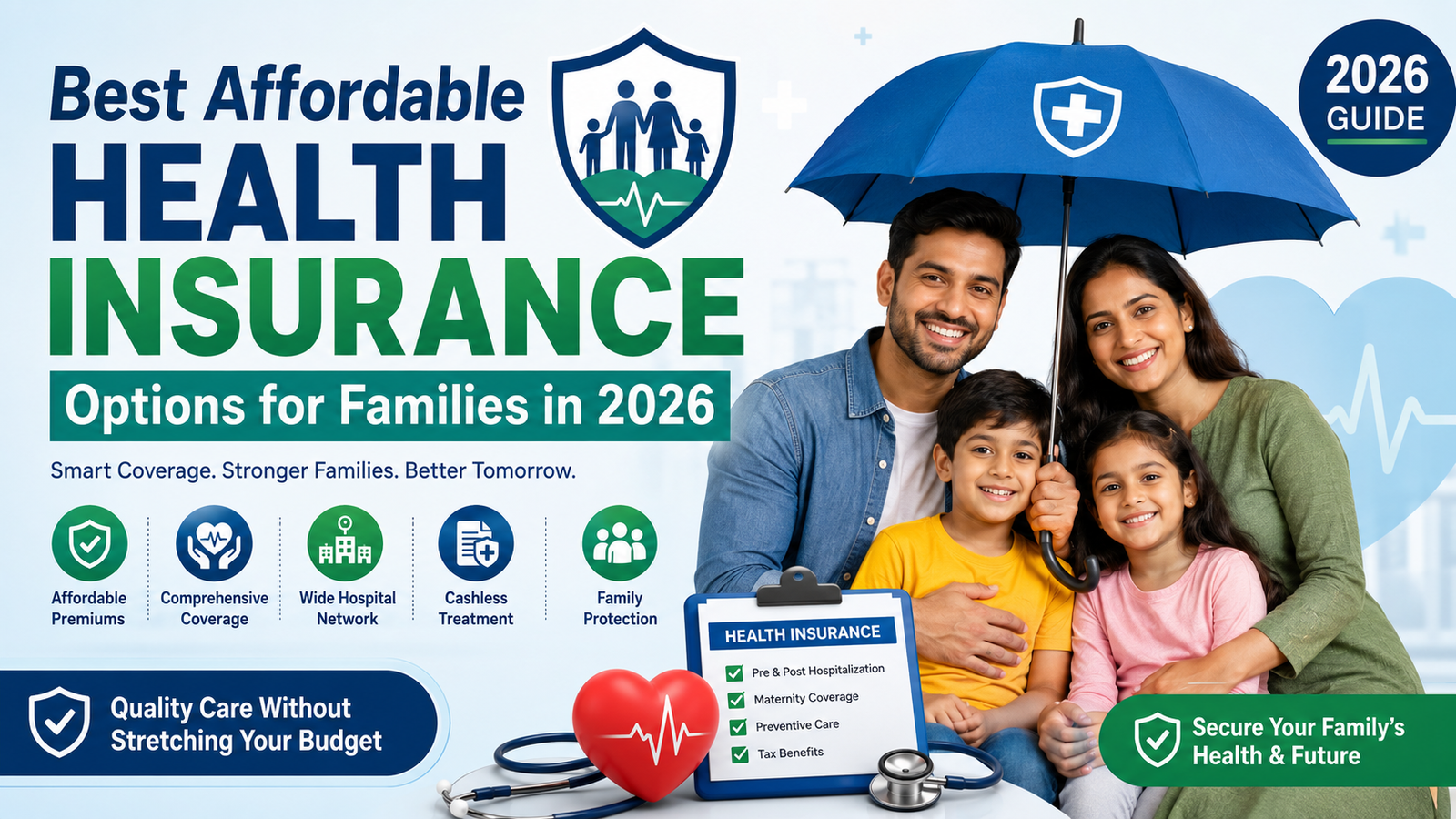
Finding affordable health insurance for a family can be challenging, especially as healthcare costs continue to rise. In 2026, families need to look beyond the monthly premium and consider deductibles, copayments, provider networks, prescription costs, and out-of-pocket maximums. The right plan should provide reliable healthcare coverage without putting unnecessary pressure on the household budget.
Fortunately, families in the United States have several health insurance options. Depending on income, family size, employment status, and location, you may qualify for employer-sponsored coverage, Marketplace plans, Medicaid, CHIP, or other cost-saving programs.
1. Affordable Care Act Marketplace Plans
For many families who do not have access to affordable employer-sponsored insurance, the Health Insurance Marketplace is one of the most important places to compare coverage. Marketplace plans are offered in different metal categories, including Bronze, Silver, Gold, and Platinum.
Bronze plans generally have lower monthly premiums but higher costs when you receive medical care. They may be suitable for families who are relatively healthy and primarily want protection against unexpected medical expenses. Silver plans can offer a middle ground between monthly premiums and healthcare costs, while Gold and Platinum plans typically have higher premiums but lower costs when using covered healthcare services.
Families should also check whether they qualify for premium tax credits or other financial assistance. Depending on household income and eligibility, these savings can significantly reduce the cost of coverage.
2. Employer-Sponsored Family Health Insurance
Employer-sponsored health insurance remains a popular option for working families. Many employers contribute toward the employee’s premium, and some also help pay for coverage for spouses and children.
Before choosing an employer plan, compare the total annual cost rather than focusing only on the paycheck deduction. Look at the family deductible, out-of-pocket maximum, doctor network, hospital coverage, and prescription drug benefits.
If both parents have access to insurance through their employers, it may be worth comparing both plans. In some cases, one parent may choose individual coverage while the children are covered under the other parent’s plan.
3. Medicaid for Eligible Families
Medicaid can provide low-cost or even no-cost health coverage to eligible individuals and families. Eligibility rules vary by state and generally depend on factors such as household income, family size, age, disability, and other circumstances.
For families who qualify, Medicaid can be one of the most affordable healthcare options available. Covered services may include doctor visits, hospital care, preventive services, and prescription medications, although benefits and rules differ by state.
Families experiencing a change in income should regularly check their eligibility because their circumstances may affect whether they qualify.
4. CHIP for Children
The Children’s Health Insurance Program, commonly known as CHIP, is designed to provide healthcare coverage for eligible children in families who earn too much to qualify for Medicaid but may still struggle to afford private insurance.
CHIP can be particularly valuable for families with children because healthcare needs can include regular checkups, vaccinations, dental care, vision services, and treatment for illnesses or injuries.
Parents should investigate Medicaid and CHIP eligibility before purchasing a private plan. Depending on household circumstances, these programs may offer substantial savings.
5. High-Deductible Health Plans With HSA Eligibility
Some families may consider a high-deductible health plan (HDHP), especially if they generally have low medical expenses. These plans often have lower monthly premiums but require the family to pay more out of pocket before the insurance begins paying for many covered services.
When an HDHP is eligible for a Health Savings Account (HSA), families may be able to contribute money to the account for qualified medical expenses. HSAs can offer tax advantages and allow individuals to save for current or future healthcare costs.
However, families should have enough savings to handle unexpected medical bills before selecting a high-deductible plan.
6. Catastrophic Health Coverage
Catastrophic health plans are designed primarily to protect against serious, unexpected medical expenses. They generally have low premiums and high deductibles and may be available only to certain eligible individuals.
These plans are not necessarily the best choice for families who regularly need healthcare services. However, for eligible households that want protection from major financial risks and have limited healthcare needs, catastrophic coverage may be worth investigating.
How to Choose the Most Affordable Family Plan
Consider these factors:
- Monthly premium
- Annual deductible
- Family out-of-pocket maximum
- Copayments and coinsurance
- Prescription drug costs
- Primary care and specialist costs
- Emergency room coverage
- Hospital expenses
- Dental and vision coverage
- Provider and hospital networks
It is also important to confirm that your family’s preferred doctors, hospitals, and medications are covered by the plan. A plan with a low premium may become expensive if your preferred healthcare providers are outside the network.
Tips to Lower Family Health Insurance Costs in 2026
Families can potentially reduce healthcare expenses by comparing multiple plans instead of automatically renewing their current coverage. Check available financial assistance and review your eligibility for government programs.
Using in-network doctors, choosing generic medications when appropriate, taking advantage of preventive care, and comparing prescription drug coverage can also help control expenses. If you have an HSA-eligible plan, contributing regularly to your HSA may provide additional financial benefits.
Final Thoughts
The best affordable health insurance option for a family in 2026 depends on household income, family size, medical needs, and access to employer coverage. Marketplace plans, employer-sponsored insurance, Medicaid, CHIP, HDHPs with HSAs, and catastrophic coverage can all serve different types of families.
Instead of choosing a plan based solely on the monthly premium, calculate the potential total yearly cost and consider how frequently your family uses healthcare services. Comparing coverage details carefully can help you find a plan that balances affordability with dependable protection.
Healthcare insurance is a major household expense, but taking the time to compare available options can help families find meaningful savings while maintaining access to essential medical care.